
Embracing Gentle Learning: A Calm Space for Education

Updated: Jun 2
A Calm Space for Learning, Confidence, and Connection
As we move into a new month, it’s a gentle reminder that learning doesn’t have to feel rushed or pressured. For many families, especially those considering home education or already on that path, it can sometimes feel like there’s a lot to think about—and a lot of noise to sort through. This space is here to keep things simple, grounded, and reassuring.
📘 Education Update (UK)
There has been an important development in UK education this week. The Children’s Wellbeing and Schools Act 2026 has now received Royal Assent and officially become law. While this may sound significant—and it is—it’s important to understand what this means in practical terms for families right now.
🌱 What This Means at the Moment
At this stage, nothing changes immediately for home-educating families. The parts of the Act relating to children not in school (often referred to as CNIS measures) are not yet in force. Before any changes take effect, the Government must still go through several further steps, including:
Developing detailed regulations
Publishing statutory guidance
Carrying out consultation processes
These stages are important because they will shape how the new system will actually work in practice.
✔️ What Remains the Same
For now, families can feel reassured that:
Home education remains lawful in the UK.
The current laws and guidance still apply.
There is no need to change your approach to home education today.
There is no requirement to engage with a register system at this stage.
Local Authorities should continue to operate under existing powers only.
👀 What to Look Out for Next
The next key stage will be consultation. This is where more detail is expected to emerge about how the proposed systems—such as any registration process—may work. It is also likely to be the point where home-educating families and organisations will have an opportunity to share their views. Current expectations suggest that any new measures may not come into force until 2027 at the earliest, although this is still to be confirmed.
🌿 A Steady Approach
For many families, this has been a long and sometimes overwhelming process. It’s completely understandable to feel tired or uncertain about what might come next. For now, the most helpful approach is a steady one:
Continue with what works for your child.
Stay gently informed.
Try not to feel pressured to act before clear guidance is in place.
The Act becoming law is an important milestone—but it does not mean that home education has suddenly changed overnight.
Education Terms Explained
LA (Local Authority): Your local council responsible for education.
EHE (Elective Home Education): Choosing to educate your child at home.
Ofsted: Inspects schools, not home education.
👉 More simple explanations can be found on the *Newsletter Page
🌼 You Are Doing Enough
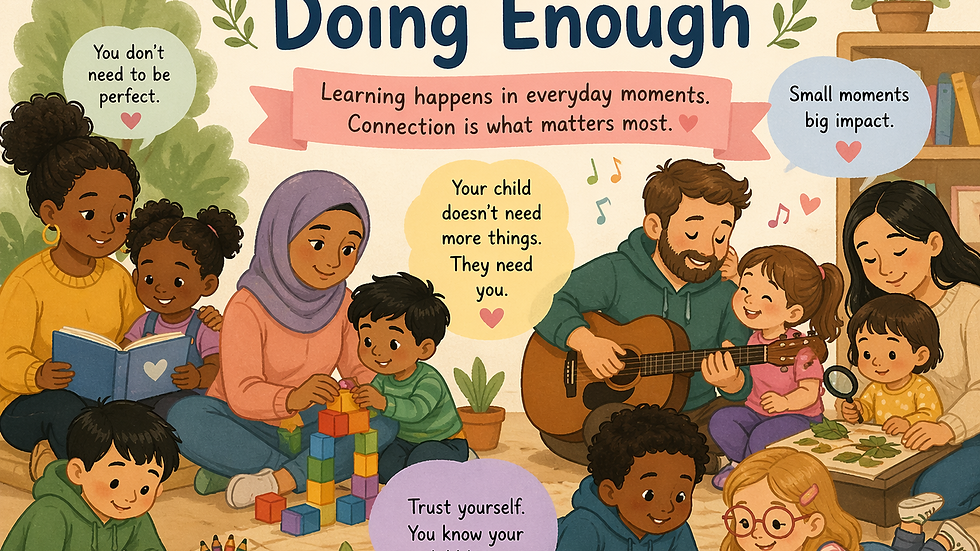
Sometimes the biggest pressure doesn’t come from policy or expectations—it comes from within. The quiet thought of: “Am I doing enough?” Learning doesn’t only happen through formal lessons, worksheets, or structured timetables. It happens in:
Conversations during the day.
Questions asked at unexpected moments.
Helping with everyday tasks.
Laughter, curiosity, and shared experiences.
🌱 Look for the Learning
This week, you might gently ask yourself:
Did we talk and share ideas?
Did my child ask questions or show curiosity?
Did they explore, create, or try something new?
Did they feel safe, supported, and listened to?
If the answer to even one of these is yes…
👉 learning is already happening.
🌊 On Difficult Days
Some days will feel slow, messy, or unproductive. On those days, it’s okay to remember:
Rest is part of learning.
Connection still matters.
You can always begin again tomorrow.
🌿 A Quiet Truth to Hold Onto
Learning does not need to look like school to be real. What you are doing matters more than you realise.
🌱 Simple Learning Ideas for This Month
These activities are designed to be easy to set up, low cost, and flexible for children of all abilities.

🌼 What Can You Spot? Walk
Take a walk outside—this could be in a garden, local street, or park. Choose a simple theme:
Colours.
Shapes.
Signs of spring.
Things that move.
Children can point, count, describe, or collect ideas to draw later. Learning naturally includes:
Observation skills.
Vocabulary development.
Early science.
Simple maths.
No equipment needed—just curiosity.

🍞 Everyday Kitchen Maths
Invite children to help with simple kitchen tasks such as:
Making toast.
Preparing fruit.
Measuring ingredients.
Talk naturally about:
Halves and quarters.
More and less.
Timing and order.
Learning naturally includes:
Real-life maths.
Sequencing.
Independence.
This builds understanding in a meaningful way—without it feeling like “doing maths.”
📖 Story Starter Jar

Write simple ideas on small pieces of paper, such as:
“A lost key…”
“A talking animal…”
“A secret door…”
Place them in a jar or bowl and pick one at random. Children can:
Tell a story out loud.
Draw it.
Act it out.
Learning naturally includes:
Imagination.
Communication.
Storytelling skills.
No writing is needed unless they want to—this can be fully spoken or creative play. If your child enjoys storytelling, you can find more simple prompts in the Free Resources section →
🌼 Closing Thought
Wherever you are on your journey—whether you are just exploring new ideas or already finding your rhythm—there is no single “right way” to support your child’s learning. Small moments matter. Connection matters. Curiosity matters. And often, what feels like “not enough” is already more than you realise.
You can explore more gentle learning ideas and monthly resources throughout the site whenever you’re ready.


Comments